Cornell Vegetable Program Enrollment

Program Areas

  • Food Safety
  • Variety Evaluation
  • Market Development
  • Pest Management
  • Cultural Practices

Enrollment Benefits

  • Telephone / Email Consultations
  • VegEdge Newsletter
  • Direct Mailings
  • Educational Meetings & Conferences
  • In-Field Educational Opportunities
  • On-Farm Research Trials

CVP Enrollment Form (PDF; 261KB)

Enrollee Login

Enter Password:

Log In To Access:

  • Issues of VegEdge Newsletters

Not an Enrollee? Enroll Now!

Online Enrollment Form

Not an Enrollee? Enroll Now!

Online Enrollment Form

Pre-Registration Deadline: August 5, 2019

EVENT HAS PASSED

Dry Bean and Potato Twilight Meetings

Dry bean and/or potato growers in the Cornell Vegetable Program region are encouraged to join us for an evening with two educational events in one! Come to the Dry Bean Meeting, the Potato Meeting, or stay for BOTH! Research updates will be provided by Cornell University faculty and the NYS IPM Program.

Hosted by CCE Cornell Vegetable Program and CCE Steuben County. For more information: Ariel Kirk, adk39@cornell.edu, (607) 664-2574 (office). In case of rain, the event will be held in the shop.

Cost

$20.00 per person
includes dinner and access to both meetings; register by Aug 5
At the Door
$20.00 per person but dinner cannot be guaranteed

Dry Bean Meeting

Event Offers DEC Credits

August 12, 2019

Monday, 4:30 - 5:45pm

Cory Mark Farms dry bean field
Corner of Whiteman Hill Rd and Gross Hill Rd
Wayland, NY 14572
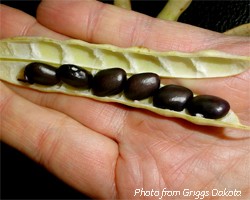
Dry Bean Meeting

An in-field overview of management of white mold in dry beans, an update on Western Bean Cutworm, use of a sweep net to scout for potato leaf hoppers, and management of potato leaf hoppers in dry beans for conventional and organic growers. Stay for dinner back at the farm shop!

Mail-in Event Flyer and Registration Form (PDF; 230KB)


Potato Meeting

Event Offers DEC Credits

August 12, 2019

Monday, 6:45 - 8:00pm

Cory Mark Farms shop
11595 Buffalo St
Wayland, NY 14572
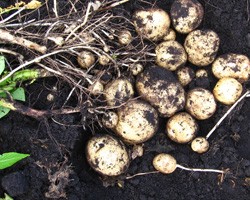
Potato Meeting

Cornell faculty will present updates on the 2019 potato trials, insect pests of potatoes, and the late blight risk. A Q&A session will wrap up this educational event!

Mail-in Event Flyer and Registration Form (PDF; 230KB)



more crops
Asparagus

Asparagus

Beets

Beets

Broccoli

Broccoli

Brussels Sprouts

Brussels Sprouts

Cabbage

Cabbage

Carrots

Carrots

Cauliflower

Cauliflower

Cucumbers

Cucumbers

Dry Beans

Dry Beans

Eggplant

Eggplant

Ethnic Vegetables

Ethnic Vegetables

Garlic

Garlic

Horseradish

Horseradish

Kohlrabi

Kohlrabi

Leeks

Leeks

Lettuce / Leafy Greens

Lettuce / Leafy Greens

Melons

Melons

Mushrooms

Mushrooms

Onions

Onions

Parsnips

Parsnips

Peas

Peas

Peppers

Peppers

Potatoes

Potatoes

Pumpkins / Gourds

Pumpkins / Gourds

Radishes

Radishes

Rhubarb

Rhubarb

Rutabaga

Rutabaga

Snap Beans

Snap Beans

Squash - Summer

Squash - Summer

Squash- Winter

Squash- Winter

Sweet Corn

Sweet Corn

Sweet Potatoes

Sweet Potatoes

Tomatoes

Tomatoes

Turnips

Turnips

more crops

Upcoming Events

African Eggplant Participatory Breeding Kick-Off

March 5, 2026

Join us to learn about the Cornell African Eggplant Research Project and learn how you can participate! African eggplant, also known as Bitterball, Garden Egg, Kittley and other names, is an important crop for many members of our community with heritage from regions such as sub-Saharan Africa, Southeast Asia, and Brazil. Since 2024, the Cornell African Eggplant Research Project has been collaborating with growers and community partners across New York to develop high-quality varieties adapted to the Northeast U.S. In this meeting, we will share information about growing and preparing African eggplant, highlight our research to date, and invite partners to collaborate with us in our 2026 participatory breeding and variety selection efforts. 

COST: FREE! You must pre-register to receive the Zoom link.

Managing the Invasive Swede Midge Webinar

Event Offers DEC Credits

March 6, 2026

Swede midge is an invasive fly that causes serious economic losses to brassica crops. Due to its small size and hidden feeding habits, swede midge is often called an "invisible pest" and damage may be misdiagnosed. In this webinar, we will review the swede midge life cycle and crop damage symptoms, current management recommendations, new research findings, and highlights from on-farm case studies with a focus on organic management. 

1.75 DEC pesticide recertification credits in categories 1a, 10, and 23.

Good Agricultural Practices (GAPs) Food Safety Training

March 10, 2026
Newark, NY

Learn about food safety on the farm! This event hosted by the Cornell Vegetable Program, Cornell Lake Ontario Fruit Team, CCE Wayne County, and the NYS Department of Agriculture, will cover good agricultural practices (GAPs) to help reduce the risk of microbial contamination on the farm, keeping food and consumers safe.

Announcements

2025 Year in Review

Our 2025 Year in Review and 2026 Preview report highlights some of the many research and educational programs led by our team in 2025. Plus, we provide a sneak peek at some of our plans for 2026!
  • Integrating Laser Weeders into Muck Onion Production
  • Cornell Vegetable Program Advances Cover Crop Research
  • New, Interactive Pesticide Safety Programming Protects Farmer Health
  • Specialty Potato Variety Trial Tests Varieties During a Hot Growing Season
  • Mushroom Enthusiasm Grows
  • Equipping Sweet Corn Growers for an Emerging Disease: Tar Spot
  • Farm Food Safety Educational Outreach
  • Sustainable Pest Management for New York Urban Farmers
  • In 2026...


Cornell Crop and Pest Management Guidelines Paused

From Cornell IPM:

Highlighting its commitment to quality and long-term sustainability, Cornell Integrated Pest Management's Pesticide Safety Education Program has announced
a pause in production of the 2026 Cornell Crop and Pest Management Guidelines.

Cornell IPM Director Alejandro Calixto said this temporary measure is the result of a comprehensive reimagining process facilitated by Illume Projects of Ithaca, which included end-user interviews, internal surveys and sales data analytics.

"It became clear to us that we cannot continue producing the guidelines and fully restructure them at the same time," Calixto said. "By pausing production, we can dedicate all available resources and time to rebuilding the production process, ensuring that when we re-launch in 2027, the guidelines will reflect a modernized approach built around the grower and other user experience."

A series of annually updated reference manuals produced by Cornell IPM and the College of Agriculture and Life Sciences (CALS), the Cornell Crop and Pest Management Guidelines are widely used by farmers, agronomists, crop consultants and extension educators in New York and throughout the Northeast. They include information about current IPM recommendations, pesticide options, cultural practices, nutrient management, disease, insect and weed identification and resistance-management strategies.

Calixto and Pesticide Safety Education Program Lead Mike Helms will spearhead efforts to restructure the guideline process over the next 12 months, with a goal of launching a more streamlined, user-friendly version in 2027.

Limited copies of the 2025 guidelines remain available for purchase while supplies last through The Cornell Store. The 2026-2027 Greenhouse Guidelines will be available.

For more information contact Helms at mjh14@cornell.edu.