Cornell Vegetable Program Enrollment

Program Areas

  • Food Safety
  • Variety Evaluation
  • Market Development
  • Pest Management
  • Cultural Practices

Enrollment Benefits

  • Telephone / Email Consultations
  • VegEdge Newsletter
  • Direct Mailings
  • Educational Meetings & Conferences
  • In-Field Educational Opportunities
  • On-Farm Research Trials

CVP Enrollment Form (PDF; 261KB)

Enrollee Login

Password:

Log In To Access:

  • Issues of VegEdge Newsletters

Not an Enrollee? Enroll Now!

Online Enrollment Form

Things to Consider When Adding Specialty Mushrooms to Your Farm

Lori Koenick, Extension Support Specialist
Cornell Vegetable Program

September 30, 2024

Let's set aside the familiar button, cremini, and portabella mushrooms (all in the same species of Agaricus mushrooms) and focus on a different and growing segment of the mushroom industry: specialty mushrooms. The USDA defines "specialty mushrooms" as any non-Agaricus mushroom, which includes Shiitake, Oyster, Lion's Mane, and many more.  

Specialty mushroom production benefits include new income sources, crop diversification, utilization of unused space or waste streams, and building soil health. These mushrooms are grown in a variety of low-cost ways in outdoor, indoor, and hybrid systems including on logs, in the ground, in raised beds, or in blocks contained in buckets or plastic bags. Crops are sold fresh, dry, powdered, or incorporated into value-added products. 

Like plants, mushrooms need specific environmental conditions to form, but sunlight is not a necessity. Humidity, temperature, and air flow are the most important considerations. 

Mushrooms are neither plants nor animals but in their own unique group of organisms called fungi. A mushroom is the fruit of a fungus. Underneath the mushroom is the branching, thread-like, main body of the organism called mycelia. To be able to grow mushrooms, we first need to grow healthy mycelia. Once we have a healthy mycelia base, then we can focus on the fruiting process to get mushrooms to form. 

Let's define some common mushroom cultivation terms:

  • Substrate: Food source for the mushroom—common substrates include logs, straw, sawdust, wood chips, compost, hardwood pellets, and combinations of such.
  • Spawn: A mixture of mycelia and substrate used to inoculate (plant) a new mushroom crop—common forms are grain, sawdust, and plugs (wooden dowels).

The general process of growing specialty mushrooms is like growing vegetables. Basic steps include:

  1. Spawn and strain selection: "variety selection"—Decide what type of mushroom to grow and which strain (variety) of the mushroom type. Spawn providers can be excellent sources of information. 
  2. Substrate preparation: "bed preparation"—Specifics depend on the substrate, and vary from chopping logs, pasteurizing straw, mixing and sterilizing block materials, and more.
  3. Inoculation: "planting"—This involves mixing the spawn with the substrate. Drilling and filling logs with plugs or sawdust spawn is one example.
  4. Spawn Run: This is the incubation growth stage where mycelium colonizes and grows throughout the substrate.
  5. Fruiting: The growth stage where mushrooms are produced and then harvested.

Growing Oysters on straw blocks, Shiitake on logs, or Wine Caps in beds are common ways to begin exploring how to add mushrooms to your farm. When thinking about what type of mushroom to grow, consider the resources you have access to and the type of growing space you plan to use. 

Indoor production consists of incubating and fruiting blocks in buildings and greenhouses using plastic bags, buckets or similar containers. Similar to controlled environment agriculture, indoor mushroom production offers the opportunity to grow more types of mushrooms year-round, producing higher and more reliable yields. Yet, indoor production can be more energy intensive, requires close monitoring of environmental conditions, and growing spaces must be kept cleaner than outdoor production due to higher contamination risk. 
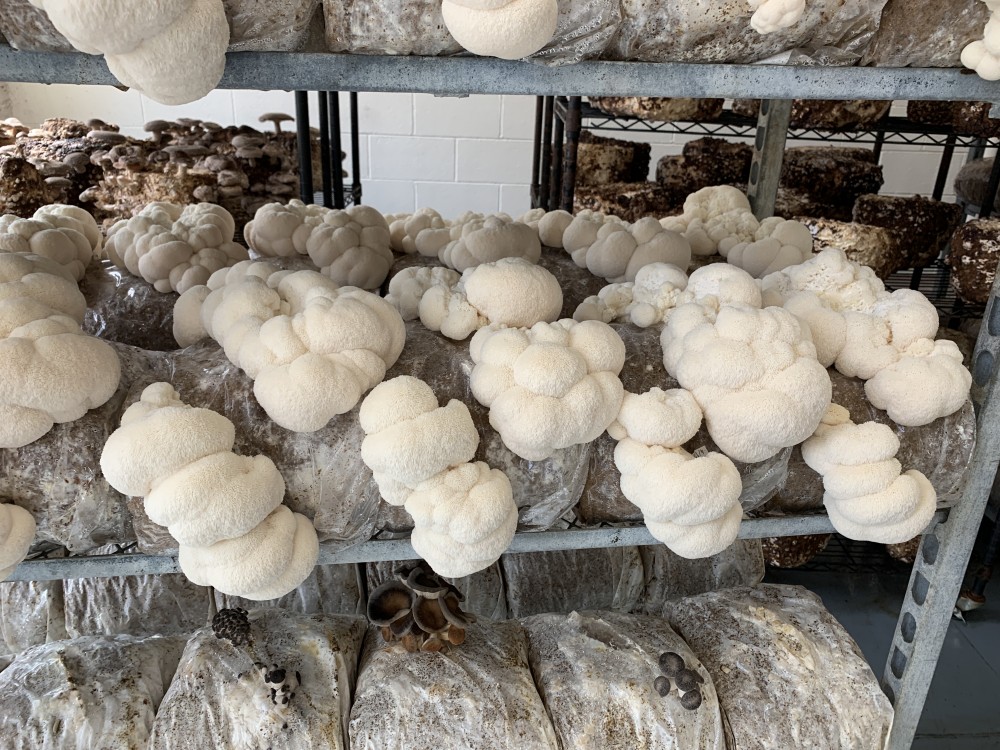
Indoor grow room showing blocks of mushrooms on racks.Mushroom blocks fruiting in an indoor grow room, Lion's Mane mushrooms featured in the center.


Outdoor production involves growing on logs, totems, or in beds. It can be done anywhere with some shade, humidity, and good airflow. Woodlots are a great option. It typically has lower costs with less infrastructure investment and energy usage, yet mushrooms can take longer to grow and produce less yield. 
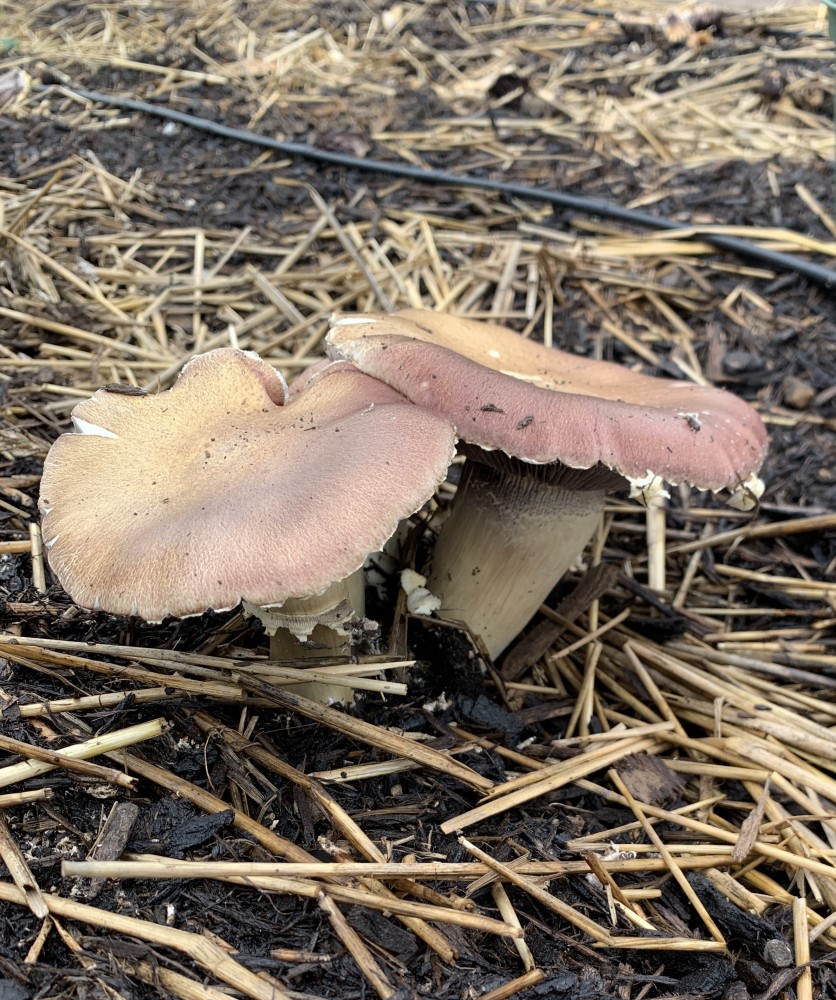
Red and white mushrooms growing on top of straw and soil.Wine Cap mushrooms fruiting in raised bed.


It does not have to be an either/or situation—growers are constantly experimenting with hybrid environments, such as growing Wine Cap beds in high tunnels or keeping fruiting logs indoors for better pest protection. Just as with growing vegetables, there is no one right way to grow mushrooms and you must figure out what works best for your farm. Experimentation is encouraged!


Things to Consider When Adding Specialty Mushrooms to Your Farm (pdf; 278KB)

more crops
Asparagus

Asparagus

Beets

Beets

Broccoli

Broccoli

Brussels Sprouts

Brussels Sprouts

Cabbage

Cabbage

Carrots

Carrots

Cauliflower

Cauliflower

Cucumbers

Cucumbers

Dry Beans

Dry Beans

Eggplant

Eggplant

Ethnic Vegetables

Ethnic Vegetables

Garlic

Garlic

Horseradish

Horseradish

Kohlrabi

Kohlrabi

Leeks

Leeks

Lettuce / Leafy Greens

Lettuce / Leafy Greens

Melons

Melons

Mushrooms

Mushrooms

Onions

Onions

Parsnips

Parsnips

Peas

Peas

Peppers

Peppers

Potatoes

Potatoes

Pumpkins / Gourds

Pumpkins / Gourds

Radishes

Radishes

Rhubarb

Rhubarb

Rutabaga

Rutabaga

Snap Beans

Snap Beans

Squash - Summer

Squash - Summer

Squash- Winter

Squash- Winter

Sweet Corn

Sweet Corn

Sweet Potatoes

Sweet Potatoes

Tomatoes

Tomatoes

Turnips

Turnips

more crops

Upcoming Events

Eden Area Winter Vegetable Meeting

Event Offers DEC Credits

February 4, 2026
North Collins, NY

Join us for a mix of industry updates, crop protection talks, pesticide safety programming, and fertility management discussions. This meeting is jointly hosted by the Cornell Vegetable Program and Timac Laing-Gro. 

1.25 DEC credits available in CORE plus 1.75 in 1a and 23.

View Eden Area Winter Vegetable Meeting Details

Orleans Regional Winter Vegetable Meeting

Event Offers DEC Credits

February 9, 2026
Albion, NY

Topics include: Breeding and evaluating tomatoes to control disease and improve yield, jar testing and ensuring spray water quality, breaking down organic matter, FSMA updates and Q&A with Ag & Markets, and industry updates. Includes hands-on learning, coffee break, and sponsor booths. 

DEC credits available: 1.0 in CORE plus 0.5 in 1a, 10 or 23

View Orleans Regional Winter Vegetable Meeting Details

African Eggplant Participatory Breeding Kick-Off

March 5, 2026

Join us to learn about the Cornell African Eggplant Research Project and learn how you can participate! African eggplant, also known as Bitterball, Garden Egg, Kittley and other names, is an important crop for many members of our community with heritage from regions such as sub-Saharan Africa, Southeast Asia, and Brazil. Since 2024, the Cornell African Eggplant Research Project has been collaborating with growers and community partners across New York to develop high-quality varieties adapted to the Northeast U.S. In this meeting, we will share information about growing and preparing African eggplant, highlight our research to date, and invite partners to collaborate with us in our 2026 participatory breeding and variety selection efforts. 

COST: FREE! You must pre-register to receive the Zoom link.

View African Eggplant Participatory Breeding Kick-Off Details

Announcements

2025 Year in Review

Our 2025 Year in Review and 2026 Preview report highlights some of the many research and educational programs led by our team in 2025. Plus, we provide a sneak peek at some of our plans for 2026!
  • Integrating Laser Weeders into Muck Onion Production
  • Cornell Vegetable Program Advances Cover Crop Research
  • New, Interactive Pesticide Safety Programming Protects Farmer Health
  • Specialty Potato Variety Trial Tests Varieties During a Hot Growing Season
  • Mushroom Enthusiasm Grows
  • Equipping Sweet Corn Growers for an Emerging Disease: Tar Spot
  • Farm Food Safety Educational Outreach
  • Sustainable Pest Management for New York Urban Farmers
  • In 2026...


Cornell Crop and Pest Management Guidelines Paused

From Cornell IPM:

Highlighting its commitment to quality and long-term sustainability, Cornell Integrated Pest Management's Pesticide Safety Education Program has announced
a pause in production of the 2026 Cornell Crop and Pest Management Guidelines.

Cornell IPM Director Alejandro Calixto said this temporary measure is the result of a comprehensive reimagining process facilitated by Illume Projects of Ithaca, which included end-user interviews, internal surveys and sales data analytics.

"It became clear to us that we cannot continue producing the guidelines and fully restructure them at the same time," Calixto said. "By pausing production, we can dedicate all available resources and time to rebuilding the production process, ensuring that when we re-launch in 2027, the guidelines will reflect a modernized approach built around the grower and other user experience."

A series of annually updated reference manuals produced by Cornell IPM and the College of Agriculture and Life Sciences (CALS), the Cornell Crop and Pest Management Guidelines are widely used by farmers, agronomists, crop consultants and extension educators in New York and throughout the Northeast. They include information about current IPM recommendations, pesticide options, cultural practices, nutrient management, disease, insect and weed identification and resistance-management strategies.

Calixto and Pesticide Safety Education Program Lead Mike Helms will spearhead efforts to restructure the guideline process over the next 12 months, with a goal of launching a more streamlined, user-friendly version in 2027.

Limited copies of the 2025 guidelines remain available for purchase while supplies last through The Cornell Store. The 2026-2027 Greenhouse Guidelines will be available.

For more information contact Helms at mjh14@cornell.edu.


NEWSLETTER  |   CURRENT PROJECTS  |   IMPACT IN NY  |   SPONSORSHIP  |   RESOURCES  |   SITE MAP