


Nightshade Management Reduces Crop Loss
Julie Kikkert, Team Leader, Extension Vegetable Specialist
Cornell Vegetable Program
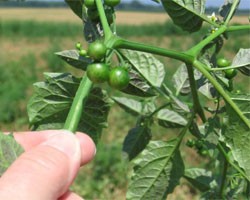
For processing pea growers, nightshades can turn to nightmares as many fields with bountiful pea crops can be rejected by processors at harvest time because nightshade berries have similar size and shape as peas. Similar crop loss can occur in beans where nightshade berries stain and cause soil to stick to pods. Nightshades should be managed in other crops as well because they reduce crop yields, and harbor diseases of Solanaceous crops such as early blight and late blight of potatoes and tomatoes. Nightshades may become more of a problem in NY if early, warm spring weather becomes a more frequent pattern.
Download a complete report on the species of nightshades in NY, physiological difference between them, emergence and growth data, and control strategies.
See nightshade complete report (pdf; 871KB)


Asparagus

Beets

Broccoli

Brussels Sprouts

Cabbage

Carrots

Cauliflower

Cucumbers

Dry Beans

Eggplant

Ethnic Vegetables

Garlic

Horseradish

Kohlrabi

Leeks

Lettuce / Leafy Greens

Melons

Mushrooms

Onions

Parsnips

Peas

Peppers

Potatoes

Pumpkins / Gourds

Radishes

Rhubarb

Rutabaga

Snap Beans

Squash - Summer

Squash- Winter

Sweet Corn

Sweet Potatoes

Tomatoes

Turnips

Upcoming Events
Chipping Potato and Field Crops Twilight Meeting

August 27, 2026
Dansville, NY
This year, our field meeting is bringing together field crops and chipping potatoes. SWNY Dairy, Livestock, and Field Crops Specialist Katelyn Miller will lead a field crops management discussion. Hear the latest updates in potato disease control and see the Cornell chipping potato variety trial run by Walter De Jong. Dinner follows the educational event.
1.5 DEC credits available in 10, 1a, 21, and 23.
IPM Field Day for Urban Growers
September 10, 2026
Buffalo, NY
Join us for a hands-on field day exploring integrated pest management and season extension tools for urban growing spaces and the opportunity to build community with local growers!
This event will focus on best practices for using row covers and rat mitigation. Check out our CCE demonstration trial using insect exclusion netting to manage swede midge, an invasive fly that causes damage to brassica crops. Explore how to identify rat activity, reduce attractants, and strengthen site management. Hear from local growers on how they manage pests with a focus on organic management and how they extend the season on their farms and gardens.