Wash Your Greens: A Low-Cost but Effective Washer/Spinner Design
Robert Hadad, Extension Vegetable Specialist
Cornell Vegetable Program
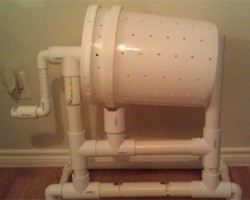
Farm Food Safety practices not only reduces the risk of microbial contamination that can lead to food-borne diseases but can also improve the post-harvest quality of washed vegetables. There are many issues dealing with farm food safety and a lot of research going on. One area centers on low-cost but effective equipment options. Dr. Jay Neal from the University of Houston has designed a greens washer/spinner built from PVC and using a 5 gallon bucket with lid. One of our farmers has built a model and modified the instructions to make building and usage easier.
Spinner Construction Manual from Univ of Houston (pdf; 1350KB)
Modified Greens Spinner Construction Manual (pdf; 458KB)

Upcoming Events
African Eggplant Participatory Breeding Kick-Off
March 5, 2026
Join us to learn about the Cornell African Eggplant Research Project and learn how you can participate! African eggplant, also known as Bitterball, Garden Egg, Kittley and other names, is an important crop for many members of our community with heritage from regions such as sub-Saharan Africa, Southeast Asia, and Brazil. Since 2024, the Cornell African Eggplant Research Project has been collaborating with growers and community partners across New York to develop high-quality varieties adapted to the Northeast U.S. In this meeting, we will share information about growing and preparing African eggplant, highlight our research to date, and invite partners to collaborate with us in our 2026 participatory breeding and variety selection efforts.
COST: FREE! You must pre-register to receive the Zoom link.
Managing the Invasive Swede Midge Webinar
March 6, 2026
Swede midge is an invasive fly that causes serious economic losses to brassica crops. Due to its small size and hidden feeding habits, swede midge is often called an "invisible pest" and damage may be misdiagnosed. In this webinar, we will review the swede midge life cycle and crop damage symptoms, current management recommendations, new research findings, and highlights from on-farm case studies with a focus on organic management.
1.75 DEC pesticide recertification credits in categories 1a, 10, and 23.
Good Agricultural Practices (GAPs) Food Safety Training
March 10, 2026
Newark, NY
Learn about food safety on the farm! This event hosted by the Cornell Vegetable Program, Cornell Lake Ontario Fruit Team, CCE Wayne County, and the NYS Department of Agriculture, will cover good agricultural practices (GAPs) to help reduce the risk of microbial contamination on the farm, keeping food and consumers safe.