


How to Wash Produce Using a Peracetic Acid (PAA) Solution
Robert Hadad, Extension Vegetable Specialist
Cornell Vegetable Program
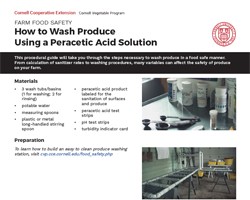
This how-to guide will take you through the steps necessary to wash produce in a food safe manner. From calculation of sanitizer rates to washing procedures, many variables can affect the safety of produce on your farm. The guide details the materials you will need, preparation, calculating and mixing the peracetic acid solution, washing produce, and testing turbidity.
This publication is based upon work supported by USDA/NIFA under award number 2012-49200-20031.
How to Wash Produce Using a Peracetic Acid Solution, revised April 2018 (pdf; 1458KB)


Asparagus

Beets

Broccoli

Brussels Sprouts

Cabbage

Carrots

Cauliflower

Cucumbers

Dry Beans

Eggplant

Ethnic Vegetables

Garlic

Horseradish

Kohlrabi

Leeks

Lettuce / Leafy Greens

Melons

Mushrooms

Onions

Parsnips

Peas

Peppers

Potatoes

Pumpkins / Gourds

Radishes

Rhubarb

Rutabaga

Snap Beans

Squash - Summer

Squash- Winter

Sweet Corn

Sweet Potatoes

Tomatoes

Turnips

Upcoming Events
IPM Field Day for Urban Growers
September 10, 2026
Buffalo, NY
Join us for a hands-on field day exploring integrated pest management and season extension tools for urban growing spaces and the opportunity to build community with local growers!
This event will focus on best practices for using row covers and rat mitigation. Check out our CCE demonstration trial using insect exclusion netting to manage swede midge, an invasive fly that causes damage to brassica crops. Explore how to identify rat activity, reduce attractants, and strengthen site management. Hear from local growers on how they manage pests with a focus on organic management and how they extend the season on their farms and gardens.