Cleaning Produce Washing Equipment: Brush Washer Conveyor System Checklist
Robert Hadad, Extension Vegetable Specialist
Cornell Vegetable Program
As we learn more about reducing microbial risk on the produce farm, more emphasis is being placed on cleaning food contact surfaces. Accessing the hard to reach spaces in wash line equipment is challenging. Most of the equipment was not made to come apart very easily or in an economically efficient manner. The checklist provided here has been developed through hands-on research cleaning equipment as thoroughly as can be measured without doing microbial testing. That level of cleaning is still being researched but, from our work, the level of cleanliness provided here appears to be sufficient.
This step-by-step checklist provides visual guidelines and suggestions for reasonably cleaning your equipment.
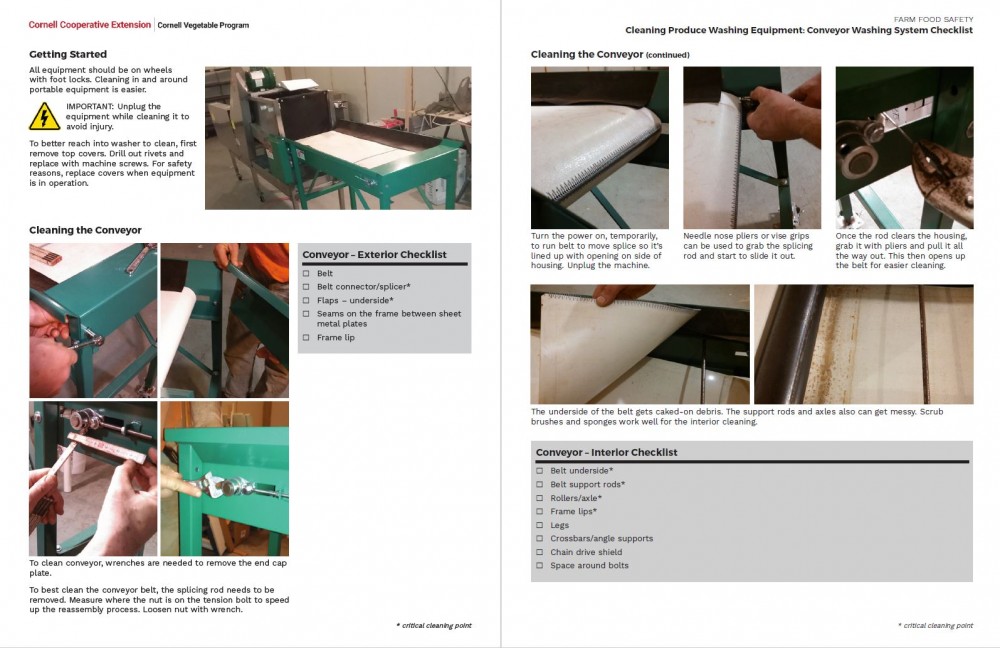
The presentations found below provide more photos of the steps of cleaning the conveyor, the brush washer, and the absorber.
Cleaning Produce Washing Equipment: Conveyor Washing System Checklist (pdf; 1693KB)
Presentation: Cleaning the Conveyor in a Brush Washer System (pdf; 2036KB)
Presentation: Cleaning the Brush Washer in a Brush Washer System (pdf; 1833KB)
Presentation: Cleaning the Absorber in a Brush Washer System (pdf; 2114KB)


Asparagus

Beets

Broccoli

Brussels Sprouts

Cabbage

Carrots

Cauliflower

Cucumbers

Dry Beans

Eggplant

Ethnic Vegetables

Garlic

Horseradish

Kohlrabi

Leeks

Lettuce / Leafy Greens

Melons

Mushrooms

Onions

Parsnips

Peas

Peppers

Potatoes

Pumpkins / Gourds

Radishes

Rhubarb

Rutabaga

Snap Beans

Squash - Summer

Squash- Winter

Sweet Corn

Sweet Potatoes

Tomatoes

Turnips