


Video Series: Essentials of Food Safety for Farmworkers
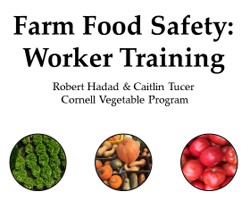
We all know that farm employees have many crucial roles on the farm, including carrying out food safety policies and practices. However, their ability to do that effectively, depends heavily on the quality of the training they receive. To meet the growing need for online, easily accessible resources, Robert Hadad and Caitlin Tucker have designed "Essentials of Food Safety for Farmworkers", a 5-part video series that covers many of the required worker training topics set forth by FSMA (the Food Safety Modernization Act), or other 3rd party auditing programs.
Part 1: Creating a Worker Training Program
In Part 1, farm employees and managers will learn about the importance of training farmworkers, topics that farmworkers should be trained on, considerations for training farmworkers, the role of the food safety manager, and resources available to managers to assist in training.
Part 2: Food Safety and Why it Matters
In Part 2, farm employees will learn 5 reasons we should care about food safety, the 3 types of pathogens that cause foodborne illnesses, the 5 routes of contamination on the farm, and potential food safety risks on the farm.
Part 3: Everyday Practices to Prevent Foodborne Illness
In Part 3, farm employees will learn about everyday practices that can reduce the risk of contaminating produce with foodborne pathogen, the steps of proper handwashing, when hands should be washed, the proper way to deal with injuries, and symptoms of foodborne illnesses.
Part 4: Reducing Food Safety Risks on the Farm
In Part 4, employees will learn the difference between cleaning and sanitizing and how to effectively do both, possible risks throughout production areas, wash/pack facilities, storage, and transportation, and steps farmworkers should take if they find a risk they cannot mitigate.
Part 5: Spot the Risk - A Series of Case Studies
In Part 5, employees will be introduced to possible scenarios containing food safety risks, learn why the scenario contains a food safety risk, learn about immediate actions they can take to minimize the risks, and learn about future changes that can be made to prevent the risk from happening again.
Transcript: Part I - Creating a Worker Training Program (pdf; 235KB)
Transcript: Part 2 - Food Safety and Why it Matters (pdf; 370KB)
Transcript: Part 3 - Everyday Practices to Prevent Foodborne Illness (pdf; 315KB)
Transcript: Part 4 - Reducing Food Safety Risks on the Farm (pdf; 461KB)
Transcript: Part 5 - Spot the Risk - A Series of Case Studies (pdf; 371KB)


Asparagus

Beets

Broccoli

Brussels Sprouts

Cabbage

Carrots

Cauliflower

Cucumbers

Dry Beans

Eggplant

Ethnic Vegetables

Garlic

Horseradish

Kohlrabi

Leeks

Lettuce / Leafy Greens

Melons

Mushrooms

Onions

Parsnips

Peas

Peppers

Potatoes

Pumpkins / Gourds

Radishes

Rhubarb

Rutabaga

Snap Beans

Squash - Summer

Squash- Winter

Sweet Corn

Sweet Potatoes

Tomatoes

Turnips

Upcoming Events
IPM Field Day for Urban Growers
September 10, 2026
Buffalo, NY
Join us for a hands-on field day exploring integrated pest management and season extension tools for urban growing spaces and the opportunity to build community with local growers!
This event will focus on best practices for using row covers and rat mitigation. Check out our CCE demonstration trial using insect exclusion netting to manage swede midge, an invasive fly that causes damage to brassica crops. Explore how to identify rat activity, reduce attractants, and strengthen site management. Hear from local growers on how they manage pests with a focus on organic management and how they extend the season on their farms and gardens.