How Copper Sprays Work and Avoiding Phytotoxicity
June 26, 2013
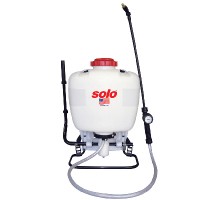
Recently, growers have asked me questions regarding the mode of action of copper and had concerns about phytotoxicity. First, let's begin with how copper controls pathogens. Copper is usually applied in the fixed form which lowers its solubility in water. Fixed coppers include basic copper sulfate (e.g., Cuprofix Ultra Disperss), copper oxide (e.g., Nordox), copper hydroxide (e.g., Kocide, Champ), copper oxychloride sulfate (e.g., COCS), and copper ions linked to fatty acids or other organic molecules (e.g., TennCop, Cueva). The spray solution is actually a suspension of copper particles, and those particles persist on plant surfaces after the spray dries. Copper ions are gradually released from these copper deposits each time the plant surface becomes wet. The gradual release of copper ions from the copper deposits provides residual protection against plant pathogens. At the same time, the slow release of copper ions from these relatively insoluble copper deposits reduces risks of phytotoxicity to plant tissues. Copper ions denature proteins, thereby destroying enzymes that are critical for cell functioning. Copper can kill pathogen cells on plant surfaces, but once a pathogen enters host tissue, it will no longer be susceptible to copper treatments. Thus, copper sprays act as protectant fungicide/bactericide treatments, but lack post-infection activity.
Because different formulations have different properties when used as spray materials, growers need to learn how to read and interpret labels. The effectiveness of copper sprays is highly correlated with the amount of elemental copper that is applied. The metallic copper content varies widely by product. Potency also varies by how the product is prepared. Finely ground copper products are more active than coarsely ground ones. Professor Tom Zitter of Cornell University suggests that for vegetable crops. Begin by choosing a copper product with at least 20% or more copper as the active ingredient to insure the greatest release of copper ions.
There are several suggestions for avoiding phytoxicity (or plant injury) with copper sprays. Limit the copper ion concentration on plant surfaces by using copper products that are relatively insoluble in water, i.e. fixed copper. Copper can accumulate to high levels on plant tissue when sprayed repeatedly to cover new growth and there is no rain. In this situation, after a rain event, a large amount of copper ions may be released leading to phytotoxicity. Solubility of fixed coppers increases under acidic conditions. Copper sprays will become more phytotoxic if they are applied in an acidic solution. Most copper products are formulated to be almost insoluble in water at pH 7.0. As the pH of water decreases the solubility of the copper fungicides increases and more copper ions are released. If the water used is too acidic (below pH 6.0-7.0 depending on the copper formulation) excessive amounts of copper ions could be produced which may cause damage to fruit and foliage. Formulations vary in solubility hydroxides are more soluble than oxychlorides which are more soluble than tribasic copper sulphates and cuprous. Less soluble formulations are usually more persistent. Check the pH of your water source. Copper sprays generally cause more phytotoxicity when applied under slow drying conditions, such as when it's wet and cool. Always read the label instructions follow the Copper and tank mix partner labels.
For a comprehensive list of Copper Products Used for Vegetable Disease Control see
http://vegetablemdonline.ppath.cornell.edu/NewsArticles/CopperFungicides2012.pdf
Sources: T. A. Zitter, Cornell University Department of Plant Pathology & Plant-Micrbiology and David A. Rosenberger, Professor of Plant Pathology, Cornell University's Hudson Valley Lab


Asparagus

Beets

Broccoli

Brussels Sprouts

Cabbage

Carrots

Cauliflower

Cucumbers

Dry Beans

Eggplant

Ethnic Vegetables

Garlic

Horseradish

Kohlrabi

Leeks

Lettuce / Leafy Greens

Melons

Mushrooms

Onions

Parsnips

Peas

Peppers

Potatoes

Pumpkins / Gourds

Radishes

Rhubarb

Rutabaga

Snap Beans

Squash - Summer

Squash- Winter

Sweet Corn

Sweet Potatoes

Tomatoes

Turnips