Identifying Ground Beetles
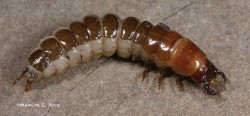
It's an easy error to make. You notice some plants being chewed. You look around for clues and spot a good sized hole in the soil nearby. If you poke around in the soil you may unearth a surprisingly large, aggressive-looking beetle and it's easy to conclude that you've found your culprit. But you would be wrong.
Ground beetles have an appetite for grubs, slugs, caterpillars, wireworms and other soil-dwelling pests. They aren't causing the damage; they're helping fight the problem. Ground beetles are usually nocturnal so they can be hard to find without digging through the soil. When exposed to light they scurry to bury themselves back under ground. They especially like the cover provided by crop debris and natural mulches.
Ground beetle larvae are even more intimidating. They tend to be robust with noticeably large jaws, the better for devouring those worms and slugs. Ground beetle adults and larvae are good examples of why it is important to accurately identify the pest before deciding which course of action to follow.
For more information on many types of ground beetles visit: http://ento.psu.edu/extension/factsheets/pdf/ground-tiger-beetles
-Amy Ivy


Asparagus

Beets

Broccoli

Brussels Sprouts

Cabbage

Carrots

Cauliflower

Cucumbers

Dry Beans

Eggplant

Ethnic Vegetables

Garlic

Horseradish

Kohlrabi

Leeks

Lettuce / Leafy Greens

Melons

Mushrooms

Onions

Parsnips

Peas

Peppers

Potatoes

Pumpkins / Gourds

Radishes

Rhubarb

Rutabaga

Snap Beans

Squash - Summer

Squash- Winter

Sweet Corn

Sweet Potatoes

Tomatoes

Turnips