


Laser Scarecrows to Deter Birds in Sweet Corn
Julie Kikkert, Team Leader, Extension Vegetable Specialist
Cornell Vegetable Program
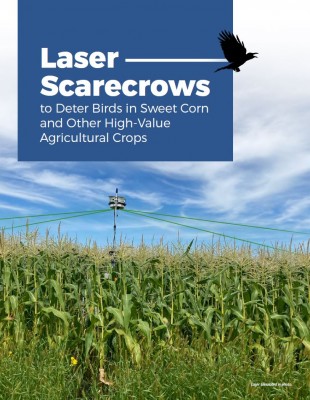
Are you considering the use of a laser scarecrow to deter birds on your farm? Cornell Cooperative Extension and the University of Rhode Island teamed up to test a research laser scarecrow on sweet corn farms.
A laser scarecrow is a device that has one or more laser modules connected to motors. The specifications of the lasers are optimized to the color and motion sensitivity of bird's eyes. When laser beams move across a field, birds become frightened and attempt to move away from the perceived threat. Light from the laser covers an area quickly and moves through the canopy without causing injury to the crop. Research demonstrates that birds do not readily become habituated to the laser.
A laser scarecrow used as the sole deterrent typically results in a significant reduction in crop damage. Combined with an auditory device, damage can be reduced even more. When used as part of an integrated management program for bird control that utilizes habitat management and multiple scare tactics, laser scarecrows can be useful tools for growers of multiple crops. All scare tactics must be deployed before birds find the field. The effectiveness of lasers depends on multiple factors such as bird species, bird populations, habitat and food availability. Lasers are not effective at deterring deer, racoons, coyotes or other mammals.
To learn more, the Laser Scarecrows to Deter Birds in Sweet Corn and Other High-Value Agricultural Crops fact sheet provides background information, research data, FAQs, and Advantages/Limitations on laser scarecrows.
Laser Scarecrows to Deter Birds in Sweet Corn and Other High-Value Agricultural Crops (pdf; 1316KB)


Asparagus

Beets

Broccoli

Brussels Sprouts

Cabbage

Carrots

Cauliflower

Cucumbers

Dry Beans

Eggplant

Ethnic Vegetables

Garlic

Horseradish

Kohlrabi

Leeks

Lettuce / Leafy Greens

Melons

Mushrooms

Onions

Parsnips

Peas

Peppers

Potatoes

Pumpkins / Gourds

Radishes

Rhubarb

Rutabaga

Snap Beans

Squash - Summer

Squash- Winter

Sweet Corn

Sweet Potatoes

Tomatoes

Turnips

Upcoming Events
IPM Field Day for Urban Growers
September 10, 2026
Buffalo, NY
Join us for a hands-on field day exploring integrated pest management and season extension tools for urban growing spaces and the opportunity to build community with local growers!
This event will focus on best practices for using row covers and rat mitigation. Check out our CCE demonstration trial using insect exclusion netting to manage swede midge, an invasive fly that causes damage to brassica crops. Explore how to identify rat activity, reduce attractants, and strengthen site management. Hear from local growers on how they manage pests with a focus on organic management and how they extend the season on their farms and gardens.