


Northern Corn Leaf Blight in Sweet Corn
Julie Kikkert, Team Leader, Extension Vegetable Specialist
Cornell Vegetable Program
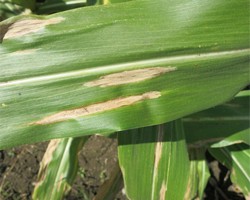
The fungus Exerohilum turcicum that causes NCLB survives as spores or mycelia on corn debris over the winter. The inoculum can be splashed onto the current corn crop or can arrive by wind. The spores can be moved long distances by wind. Early infections come from within the field and are more damaging. As the season progresses and the numbers of spores in the air increases, all fields become susceptible. Infection is favored by leaf wetness and cool weather (64-81 F) as typically occurs later in the growing season.
Lesions of NCLB begin as grayish green and become tan as they mature. The slender oblong shape, with tapered ends, gives them a cigar or boat-shaped appearance. Lesions range from 1 to 6 inches in length and may coalesce to cover the entire leaf. Spores are produced on the underside of the leaves, and appear as dusty green fuzz.
Resistant varieties and cultural practices to reduce inoculum and disease risk are the best practices. Fields should be scouted whorl through tassel. There is a scouting video for field corn developed by the NYS IPM Program (see list of resources below). Several fungicides are labeled and a listing can be found in the Cornell Vegetable Guidelines.
ADDITIONAL RESOURCES
NYS IPM Scouting video:
Cornell NCLB fact sheet includes lists of fungicides and their relative effectiveness. Note: check labels for sweet corn.
Vegetable MD Online, Sweet Corn Diseases


Asparagus

Beets

Broccoli

Brussels Sprouts

Cabbage

Carrots

Cauliflower

Cucumbers

Dry Beans

Eggplant

Ethnic Vegetables

Garlic

Horseradish

Kohlrabi

Leeks

Lettuce / Leafy Greens

Melons

Mushrooms

Onions

Parsnips

Peas

Peppers

Potatoes

Pumpkins / Gourds

Radishes

Rhubarb

Rutabaga

Snap Beans

Squash - Summer

Squash- Winter

Sweet Corn

Sweet Potatoes

Tomatoes

Turnips

Upcoming Events
Vegetable Pest and Cultural Management Field Meeting for Auction Growers -- Ontario Produce Auction

July 15, 2025
Stanley, NY
This evening meeting will demonstrate pest management in fresh market vegetables in both field and greenhouse (high tunnel) vegetables, primarily for those growing for wholesale auction. A hands-on demonstration of weed, insect and disease identification in vegetables including management options. Details on each topic will focus on field observations at the farm.
Orleans Summer Vegetable Meeting, 2025
July 16, 2025
Waterport, NY
Meeting themes are pest management in a wide array of produce and best practices for pesticide use. Professor Brian Nault will cover allium leaf miner and thrips in onions, garlic, and leeks, and discuss insect challenges in other crops. Bring your questions! We'll also have a field walk that includes high tunnel tomato and cucumber.
DEC credits available: 0.5 in CORE plus either 1.25 in 1a and 23, or 0.75 in 24.
Vegetable Pest and Cultural Management Field Meeting for Auction Growers -- Finger Lakes Produce Auction
July 18, 2025
Penn Yan, NY
This evening meeting will demonstrate pest management in fresh market vegetables in both field and greenhouse (high tunnel) vegetables, primarily for those growing for wholesale auction. A hands-on demonstration of weed, insect and disease identification in vegetables including management options. Details on each topic will focus on field observations at the farm.