


Responding to Hailstorms 2018
Crystal Stewart-Courtens, Extension Vegetable Specialist
Eastern New York Commercial Horticulture
Unfortunately, the hail season has started early and with a vengeance this year. If you find yourself facing the aftermath of a hailstorm, here are a few things to consider.
The damage left by hail varies tremendously based on the size and shape of the hailstone, the wind velocity of the storm, the duration of the hail event, and the stage of growth plants are in. Deciding how to respond is really case-by-case. Two farms right next to each other can experience very different levels of damage. However, there are some rules of thumb that generally hold true.
· Cucurbits are going to look really bad but are likely to recover. Those huge leaves tend to tatter very dramatically during hail, and can look absolutely awful. However, the leaves can also help to protect the growing points, which largely determine whether a plant will recover or not. Generally cucurbits that are old enough to have an established root system and have intact growing points will be able to generate new leaves very quickly and will begin producing fruit within a couple of weeks. To facilitate this process, give some extra nitrogen through the drip system. Pick and remove summer squash fruit that were damaged by hail if you can.
· All plants will benefit from a protective fungicide application. After hail, plants have hundreds of small (or large) wounds which leave them extremely vulnerable to diseases. As soon as you can get on the field, apply a protectant such as copper or chlorothalonil (copper will protect from bacterial and fungal diseases so is the better option), even if you applied one before the storm. This will help prevent infection while the plant heals up those wounds.
· Incidence of bacterial rot in onions is going to increase. We tend to see many more issues with onion storage following hail. Copper may help somewhat, but results have been mixed to poor.
· Document the Damage. In case the county or state declares your area a disaster zone, you may be eligible for compensation for losses. Take the time to photograph damage to crops, buildings, and other farm infrastructure to better support your estimated economic impact.
Deciding what to do with tomatoes can be tricky. According to Dr. Reiners, determinate varieties suffering from moderate to severe damage (think of snapped branches and stripped leaves as seen in the image) are most likely to be lost causes because by the time they recover they will practically be at the end of their lives. It is best to pull plants at this threshold out. Indeterminate tomatoes have a better chance of recovering from hail. All fruit which was hit will be relegated to seconds at the very best. Damage can vary greatly by variety because of the differences in canopy cover, so assess each separately. Last year we saw Primo Reds that were a complete loss next to Amish Paste tomatoes which were about 80% ok.
On plants with heavy foliage such as corn and sweet potatoes, a foliar feeding including nitrogen and some micronutrients may be beneficial. Remember that you have to have intact foliage to spray for this to be effective.
Once you have done everything you can to clean up and protect your plants, it is often best from a mental health standpoint to walk away for a few days up to a week. There is a small period of time where this is nothing more to do but let the plants recover. Nice time for a mini vacation. Really.
As always, if you would like help deciding what to do after hail or any other weather event, please give us a call.
This article is from the May 17 2018 edition of the ENYCHP Vegetable News. Click Here to view the full newsletter.
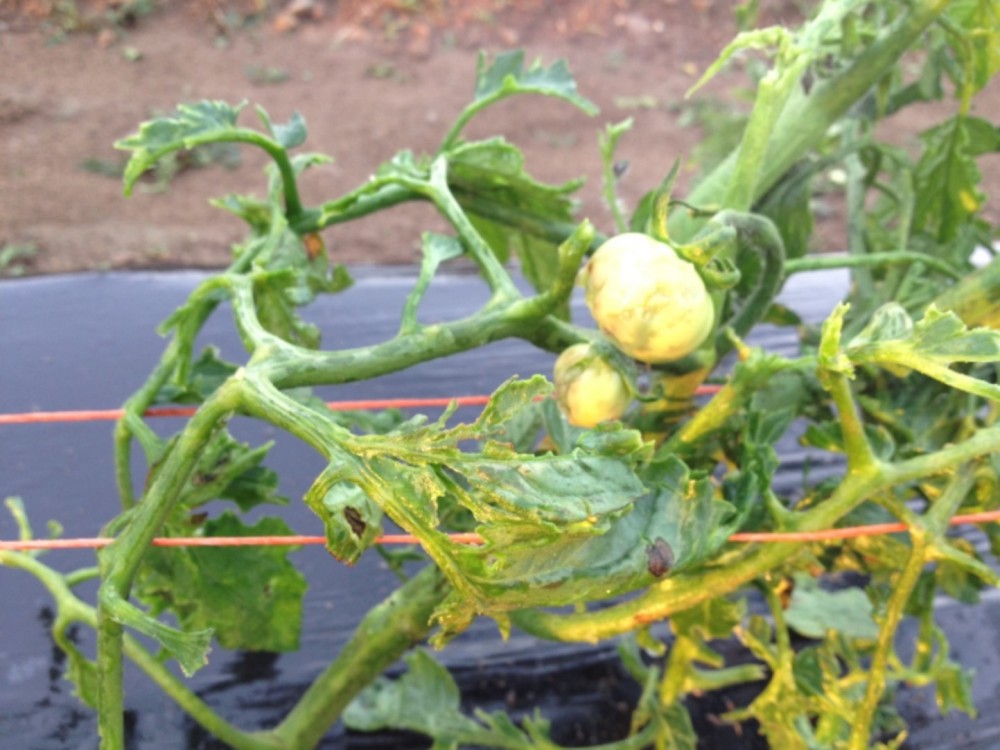 Exposed fruit have been severely damaged by hail. If these plants were
saved, these fruit would not be marketable. Image: CLS
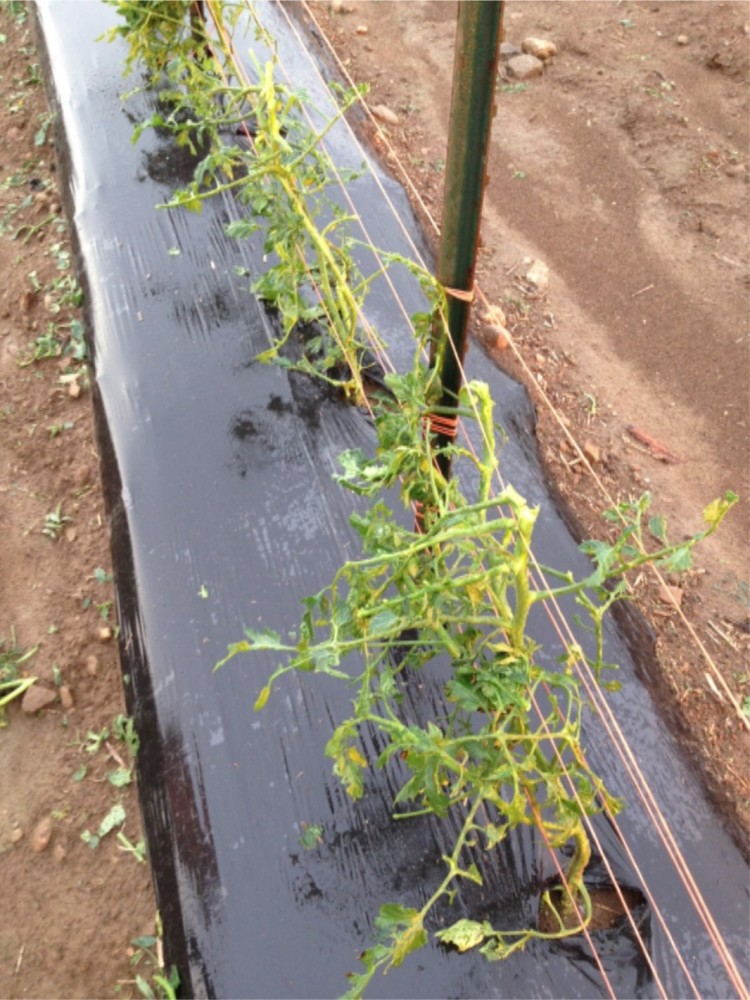 Determinate plants were snapped off about halfway
 by high winds and stripped by hail. These plants are
not salvageable. Image: CLS


Asparagus

Beets

Broccoli

Brussels Sprouts

Cabbage

Carrots

Cauliflower

Cucumbers

Dry Beans

Eggplant

Ethnic Vegetables

Garlic

Horseradish

Kohlrabi

Leeks

Lettuce / Leafy Greens

Melons

Mushrooms

Onions

Parsnips

Peas

Peppers

Potatoes

Pumpkins / Gourds

Radishes

Rhubarb

Rutabaga

Snap Beans

Squash - Summer

Squash- Winter

Sweet Corn

Sweet Potatoes

Tomatoes

Turnips

Upcoming Events
African Eggplant Participatory Breeding Kick-Off
March 5, 2026
Join us to learn about the Cornell African Eggplant Research Project and learn how you can participate! African eggplant, also known as Bitterball, Garden Egg, Kittley and other names, is an important crop for many members of our community with heritage from regions such as sub-Saharan Africa, Southeast Asia, and Brazil. Since 2024, the Cornell African Eggplant Research Project has been collaborating with growers and community partners across New York to develop high-quality varieties adapted to the Northeast U.S. In this meeting, we will share information about growing and preparing African eggplant, highlight our research to date, and invite partners to collaborate with us in our 2026 participatory breeding and variety selection efforts.
COST: FREE! You must pre-register to receive the Zoom link.
Managing the Invasive Swede Midge Webinar

March 6, 2026
Swede midge is an invasive fly that causes serious economic losses to brassica crops. Due to its small size and hidden feeding habits, swede midge is often called an "invisible pest" and damage may be misdiagnosed. In this webinar, we will review the swede midge life cycle and crop damage symptoms, current management recommendations, new research findings, and highlights from on-farm case studies with a focus on organic management.
1.75 DEC pesticide recertification credits in categories 1a, 10, and 23.
Good Agricultural Practices (GAPs) Food Safety Training
March 10, 2026
Newark, NY
Learn about food safety on the farm! This event hosted by the Cornell Vegetable Program, Cornell Lake Ontario Fruit Team, CCE Wayne County, and the NYS Department of Agriculture, will cover good agricultural practices (GAPs) to help reduce the risk of microbial contamination on the farm, keeping food and consumers safe.