Cornell Vegetable Program Enrollment

Program Areas

  • Food Safety
  • Variety Evaluation
  • Market Development
  • Pest Management
  • Cultural Practices

Enrollment Benefits

  • Telephone / Email Consultations
  • VegEdge Newsletter
  • Direct Mailings
  • Educational Meetings & Conferences
  • In-Field Educational Opportunities
  • On-Farm Research Trials

CVP Enrollment Form (PDF; 261KB)

Enrollee Login

Enter Password:

Log In To Access:

  • Issues of VegEdge Newsletters

Not an Enrollee? Enroll Now!

Online Enrollment Form

Not an Enrollee? Enroll Now!

Online Enrollment Form

Event Offers DEC Credits

Event Details

Date

March 19, 2013

Time

1:00 - 4:00 pm

Location

CCE Monroe County
249 Highland Avenue
Rochester, NY 14620

Cost

This event is free.
Pre-registration is required.

Host

Cornell Vegetable Program

Carol MacNeil
585-394-3977 x406

Pre-Registration Deadline: March 11, 2013

EVENT HAS PASSED

Tomato/Potato Late Blight Risk on YOUR Farm - An Advanced Forecast Tool

March 19, 2013
Tomato/Potato Late Blight Risk on YOUR Farm - An Advanced Forecast Tool

In 2012, growers and consultants used the advanced Late Blight Decision Support System (DSS) forecast on 12 tomato and/or potato farms for part or all of the season. The email/text spray alerts and broad base of fungicide info made the LB DSS easier to use and more helpful than ever before. It provided scientific information to help them make better fungicide spray decisions, and in some cases safely stretch their spray schedule during the hot, dry weather.

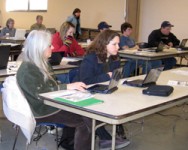
Learn how to use this new late blight forecast tool on your farm. Participants will receive usernames and passwords for the Late Blight Decision Support System (DSS) website, will designate the location of their farm/fields on their personal account, and can input their varieties, at the workshop. They can also sign up for email/text fungicide spray alerts. In addition to using weather station data, the system uses point National Weather System forecasts for their individual farm location for predicting blight weather and fungicide weathering several days into the future. The DSS forecasts take into account varietal susceptibility to late blight and the relative effectiveness of a wide range of fungicides growers may choose to use.

A laptop computer capable of wireless internet access is needed for the workshop. Please notify us when you register if you would like to borrow one for the day.

Participation is FREE but pre-registration is required by Monday, March 11 and space is limited! To register, contact Angela Parr.

If you have questions about the workshop or the late blight Decision Support System, contact Carol MacNeil. DEC and CCA credits will be available.



more crops
Asparagus

Asparagus

Beets

Beets

Broccoli

Broccoli

Brussels Sprouts

Brussels Sprouts

Cabbage

Cabbage

Carrots

Carrots

Cauliflower

Cauliflower

Cucumbers

Cucumbers

Dry Beans

Dry Beans

Eggplant

Eggplant

Ethnic Vegetables

Ethnic Vegetables

Garlic

Garlic

Horseradish

Horseradish

Kohlrabi

Kohlrabi

Leeks

Leeks

Lettuce / Leafy Greens

Lettuce / Leafy Greens

Melons

Melons

Mushrooms

Mushrooms

Onions

Onions

Parsnips

Parsnips

Peas

Peas

Peppers

Peppers

Potatoes

Potatoes

Pumpkins / Gourds

Pumpkins / Gourds

Radishes

Radishes

Rhubarb

Rhubarb

Rutabaga

Rutabaga

Snap Beans

Snap Beans

Squash - Summer

Squash - Summer

Squash- Winter

Squash- Winter

Sweet Corn

Sweet Corn

Sweet Potatoes

Sweet Potatoes

Tomatoes

Tomatoes

Turnips

Turnips

more crops

Upcoming Events

2026 Ontario Produce Auction Winter Growers Meeting

Event Offers DEC Credits

January 14, 2026
Stanley, NY

At this grower-focused meeting, ag industry experts will discuss European Cherry Fruit Fly, greenhouse phytosanitary inspections, the benefits of using cover crops, plus more. Two grower panel discussions will focus on pest management techniques. DEC recertification credits offered in categories 10, 1a, 22, 23, and 24.

Announcements

Cornell Crop and Pest Management Guidelines Paused

From Cornell IPM:

Highlighting its commitment to quality and long-term sustainability, Cornell Integrated Pest Management's Pesticide Safety Education Program has announced
a pause in production of the 2026 Cornell Crop and Pest Management Guidelines.

Cornell IPM Director Alejandro Calixto said this temporary measure is the result of a comprehensive reimagining process facilitated by Illume Projects of Ithaca, which included end-user interviews, internal surveys and sales data analytics.

"It became clear to us that we cannot continue producing the guidelines and fully restructure them at the same time," Calixto said. "By pausing production, we can dedicate all available resources and time to rebuilding the production process, ensuring that when we re-launch in 2027, the guidelines will reflect a modernized approach built around the grower and other user experience."

A series of annually updated reference manuals produced by Cornell IPM and the College of Agriculture and Life Sciences (CALS), the Cornell Crop and Pest Management Guidelines are widely used by farmers, agronomists, crop consultants and extension educators in New York and throughout the Northeast. They include information about current IPM recommendations, pesticide options, cultural practices, nutrient management, disease, insect and weed identification and resistance-management strategies.

Calixto and Pesticide Safety Education Program Lead Mike Helms will spearhead efforts to restructure the guideline process over the next 12 months, with a goal of launching a more streamlined, user-friendly version in 2027.

Limited copies of the 2025 guidelines remain available for purchase while supplies last through The Cornell Store. The 2026-2027 Greenhouse Guidelines will be available.

For more information contact Helms at mjh14@cornell.edu.