Sorry, Pre-Registration for FSMA and GAPs/HGAPs Produce Safety Alliance Training Course has passed.
Sorry, Pre-Registration for Workshop on Farm Food Safety Plan Writing has passed.
Sorry, Pre-Registration for Workshop on Farm Food Safety Plan Writing has passed.
Produce Grower Food Safety Training - FSMA and GAPs/HGAPs
This program is for fruit and vegetable growers who need Food Safety Modernization Act (FSMA) certification or GAPs/HGAPs (Good Agricultural Practices/ Harmonized Good Agricultural Practices) training required by buyers (i.e. 3rd-party food safety audits based on a written food safety plan) or if you are just interested in learning about produce safety.Over the course of the training, certified Produce Safety Alliance trainers will cover content contained in these seven modules:
- Introduction to Produce Safety
- Worker Health, Hygiene, and Training
- Soil Amendments
- Wildlife, Domesticated Animals, and Land Use
- Agricultural Water (Part I: Production Water; Part II: Postharvest Water)
- Postharvest Handling and Sanitation
- How to Develop a Farm Food Safety Plan
FSMA and GAPs/HGAPs Produce Safety Alliance Training Course
January 30, 2018
8:00 AM - 5:15 PM
CCE Niagara County Training Center
4487 Lake Ave
Lockport, NY 14094
Cost
$70.00
A maximum of 2 additional attendees from the same farm/organization allowed at reduced price.
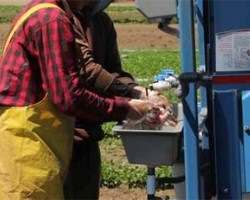
The PSA Grower Training Course is one way to satisfy the FSMA Produce Safety Rule requirement outlined in section 112.22(c) that requires 'At least one supervisor or responsible party for your farm must have successfully completed food safety training at least equivalent to that received under standardized curriculum recognized as adequate by the Food and Drug Administration.'
Click Here to Learn More about Who is Covered Under the Rule and The Compliance Dates Timeline
Over the course of the training, certified Produce Safety Alliance trainers will cover content contained in these seven modules:
- Introduction to Produce Safety
- Worker Health, Hygiene, and Training
- Soil Amendments
- Wildlife, Domesticated Animals, and Land Use
- Agricultural Water (Part I: Production Water; Part II: Postharvest Water)
- Postharvest Handling and Sanitation
- How to Develop a Farm Food Safety Plan
Attendees will be provided with a foundation of Good Agricultural Practices (GAPs) and co-management information, FSMA Produce Safety Rule requirements, and details on how to develop a farm food safety plan.
Individuals who participate in this course are expected to gain a basic understanding of:
- Microorganisms relevant to produce safety and where they may be found on the farm
- How to identify microbial risks, practices that reduce risks, and how to begin implementing produce safety practices on the farm
- Parts of a farm food safety plan and how to begin writing one
Your registration also includes lunch, snacks, and coffee. Pre-registration is required by January 25.
For more information, please contact Craig Kahlke (fruit growers) or Robert Hadad (vegetable growers)
Mail-in Registration Form (PDF; 931KB)
Workshop on Farm Food Safety Plan Writing
January 31, 2018
8:30 AM registration and set-up, 9:00 AM - 3:00 PM
CCE Niagara County Training Center
4487 Lake Ave
Lockport, NY 14094
Cost
$75.00
A maximum of 2 additional attendees from the same farm/organization allowed at reduced price.

Although this is not a requirement of FSMA, it is for those being asked by their buyers to have a food safety plan and undergo a 3rd-party audit. Participation in this session is limited to those who previously attended a 1-day FSMA or GAPs training. It is recommended that you bring a laptop if you are attending, or reserve one from CCE in advance by calling 585-735-5448.
This session will begin with computer set-up at 8:30 AM with the program starting at 9 AM.
Registration includes a bag of food safety resources, including working training videos (one bag per farm), and a flash drive pre-loaded with food safety plan templates, record-keeping sheets, reference materials, and much more. Lunch provided.
Pre-registration is required by January 25.
For more information, please contact Craig Kahlke (fruit growers) or Robert Hadad (vegetable growers)