Spring Garlic Recommendations
Crystal Stewart-Courtens, Extension Vegetable Specialist
Eastern New York Commercial Horticulture

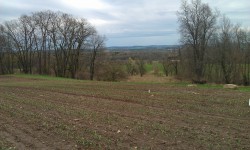
Weed control: Once weeds are allowed to establish in a garlic field, garlic is virtually unable to compete for water, nutrients and light. The key to weed control is to take care of weeds early. There are a few chemical controls available (Table 1). Clean, weed-free mulch is often applied in the fall after the ground freezes and may be left on through the growing season. This will suppress germination of annual weeds. Perennial weeds should be controlled physically or chemically prior to planting in the fall, because they are nearly impossible to control during the growing season. Surface cultivation between rows to control seedlings is effective, but in-row mechanical cultivation is quite disruptive. Flame weeding of seedlings between rows is also effective if no hay mulch is being used. -CLS
Garlic Fertility Table 1 (pdf; 184KB)

Upcoming Events
Orleans Regional Winter Vegetable Meeting
February 9, 2026
Albion, NY
Topics include: Breeding and evaluating tomatoes to control disease and improve yield, jar testing and ensuring spray water quality, breaking down organic matter, FSMA updates and Q&A with Ag & Markets, and industry updates. Includes hands-on learning, coffee break, and sponsor booths.
DEC credits available: 1.0 in CORE plus 0.5 in 1a, 10 or 23
African Eggplant Participatory Breeding Kick-Off
March 5, 2026
Join us to learn about the Cornell African Eggplant Research Project and learn how you can participate! African eggplant, also known as Bitterball, Garden Egg, Kittley and other names, is an important crop for many members of our community with heritage from regions such as sub-Saharan Africa, Southeast Asia, and Brazil. Since 2024, the Cornell African Eggplant Research Project has been collaborating with growers and community partners across New York to develop high-quality varieties adapted to the Northeast U.S. In this meeting, we will share information about growing and preparing African eggplant, highlight our research to date, and invite partners to collaborate with us in our 2026 participatory breeding and variety selection efforts.
COST: FREE! You must pre-register to receive the Zoom link.
Managing the Invasive Swede Midge Webinar
March 6, 2026
Swede midge is an invasive fly that causes serious economic losses to brassica crops. Due to its small size and hidden feeding habits, swede midge is often called an "invisible pest" and damage may be misdiagnosed. In this webinar, we will review the swede midge life cycle and crop damage symptoms, current management recommendations, new research findings, and highlights from on-farm case studies with a focus on organic management.
1.75 DEC pesticide recertification credits in categories 1a, 10, and 23.