


Early Pumpkin Ripening
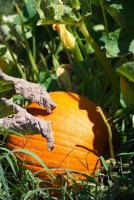
Ideally, pumpkins should be harvested when fully mature, with a deep orange color and hardened rind. However, as long as pumpkins have started to turn color, they will ripen off the vine if held under the proper conditions. While not ideal, this may be preferable to leaving them in the field if conditions are not favorable.
If necessary, pumpkins can be ripened in a well-ventilated barn or greenhouse. The best temperatures for ripening are 80-85 degrees Fahrenheit with a relative humidity of 80-85%. Night temperatures should not drop below the sixties. Even if pumpkins are ripe, a period of curing can improve storage life. The curing period should be about 10 days. During this process, the fruit skin hardens, wounds heal and immature fruit ripens all of which prolongs the storage life. Pumpkins should be stored in a cool, dry place. Ideal temperatures are between 50 F and 60 F and relative humidity of 50 - 70%. Higher humidity allows condensation on the fruit with risk of disease, and lower humidity can cause dehydration. Higher temperatures increase respiration and can cause weight loss. Temperatures lower than 50 F cause chilling injury. In a greenhouse, temperature can be managed with ventilation on sunny days. Unless it is quite cool, heat is not likely to be needed if the house is closed up at night.
Often it is not feasible to harvest pumpkins early and store them until they can be marketed, and so they must be stored in the field. If vines and fruit are healthy, storage in the field can be successful for a few weeks. If the vines die back, damage to the fruit from sun, disease and insects is more likely. In any case, it is important to scout for insects feeding on the fruit and handles, which may include squash bug nymphs or adults, or striped cucumber beetle. Control them if damage is evident. In fields that have a history of Phytophthora blight, Fusarium fruit rot, or black rot, field storage may increase the incidence of these problems, particularly if we have a period of wet weather or a major storm while fruit is sitting in the field. This has been one of the causes of significant losses in recent years, and one reason that we recommend bringing fruit in as soon as it is mature.


Asparagus

Beets

Broccoli

Brussels Sprouts

Cabbage

Carrots

Cauliflower

Cucumbers

Dry Beans

Eggplant

Ethnic Vegetables

Garlic

Horseradish

Kohlrabi

Leeks

Lettuce / Leafy Greens

Melons

Mushrooms

Onions

Parsnips

Peas

Peppers

Potatoes

Pumpkins / Gourds

Radishes

Rhubarb

Rutabaga

Snap Beans

Squash - Summer

Squash- Winter

Sweet Corn

Sweet Potatoes

Tomatoes

Turnips

Upcoming Events
Chipping Potato and Field Crops Twilight Meeting

August 27, 2026
Dansville, NY
This year, our field meeting is bringing together field crops and chipping potatoes. SWNY Dairy, Livestock, and Field Crops Specialist Katelyn Miller will lead a field crops management discussion. Hear the latest updates in potato disease control and see the Cornell chipping potato variety trial run by Walter De Jong. Dinner follows the educational event.
1.5 DEC credits available in 10, 1a, 21, and 23.
IPM Field Day for Urban Growers
September 10, 2026
Buffalo, NY
Join us for a hands-on field day exploring integrated pest management and season extension tools for urban growing spaces and the opportunity to build community with local growers!
This event will focus on best practices for using row covers and rat mitigation. Check out our CCE demonstration trial using insect exclusion netting to manage swede midge, an invasive fly that causes damage to brassica crops. Explore how to identify rat activity, reduce attractants, and strengthen site management. Hear from local growers on how they manage pests with a focus on organic management and how they extend the season on their farms and gardens.