


Scouting Tips for Onion Thrips in Onions
Christy Hoepting, Extension Vegetable Specialist
Cornell Vegetable Program
To find the first thrips of the season, look deep into the leaf axils. Inspect 20 to 30 plants and count the total number of onion thrips (OT) per plant and divide by the average number of leaves per plant to get the number of OT per leaf. Thrips feeding causes silvery streaking along the leaves. If you can already see thrips feeding damage that is also a good indication that it is time to spray. If there is a lot of feeding damage, than you likely missed a timely first spray.
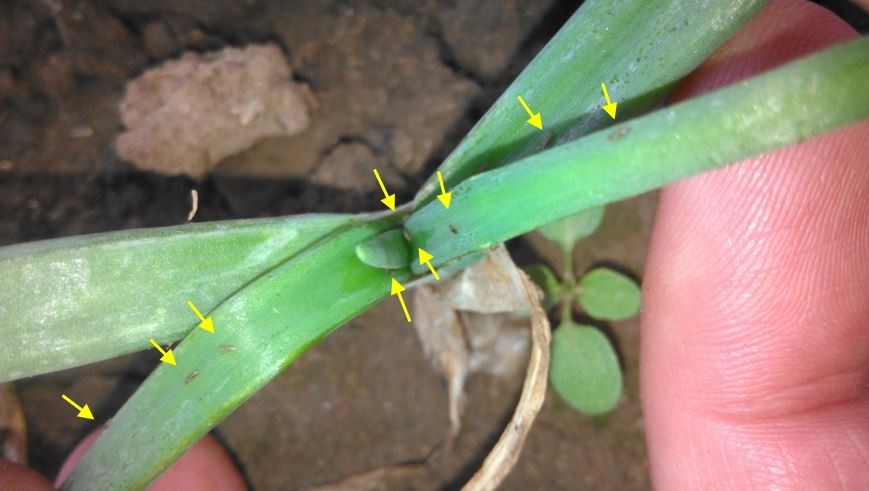 Adult onion thrips are the first thrips of the season. They are tiny brown, sliver-like insects up to 2 mm in length. Photo by C. Hoepting, CCE Cornell Vegetable Program
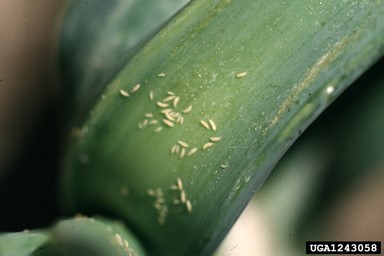 Onion thrips nymphs are yellow and 0.5 to 1.2 mm in length. Photo by Whitney Cranshaw, Colorado State University.
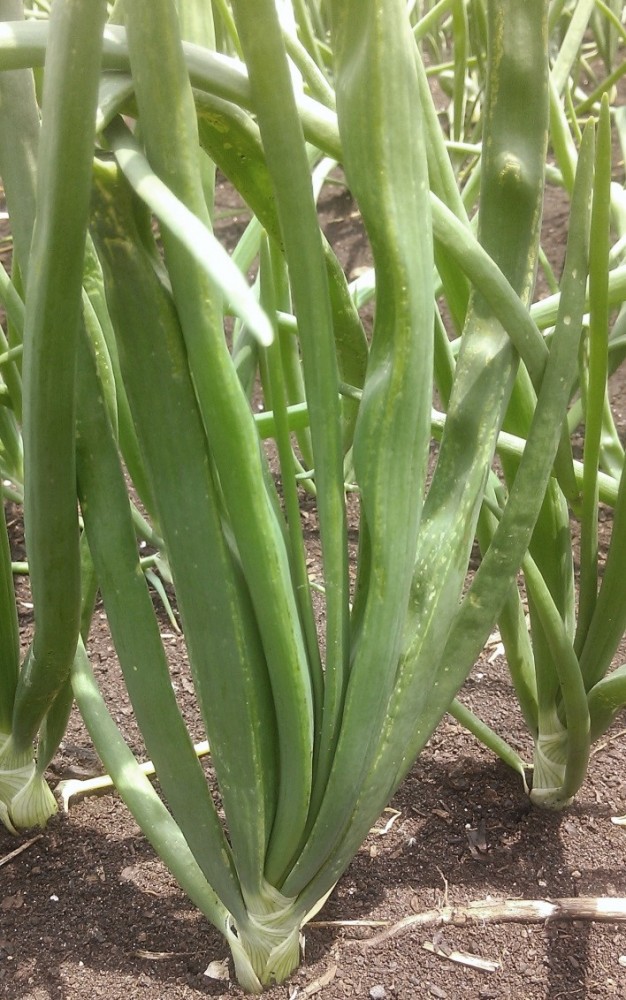 Subtle streaking along leaves is an early indication of early onion thrips feedling. This plant has reached the spray threshold. Photo by C. Hoepting, CCE Cornell Vegetable Program
Scouting Tips for Onion Thrips in Onions (pdf; 239KB)


Asparagus

Beets

Broccoli

Brussels Sprouts

Cabbage

Carrots

Cauliflower

Cucumbers

Dry Beans

Eggplant

Ethnic Vegetables

Garlic

Horseradish

Kohlrabi

Leeks

Lettuce / Leafy Greens

Melons

Mushrooms

Onions

Parsnips

Peas

Peppers

Potatoes

Pumpkins / Gourds

Radishes

Rhubarb

Rutabaga

Snap Beans

Squash - Summer

Squash- Winter

Sweet Corn

Sweet Potatoes

Tomatoes

Turnips

Upcoming Events
Vegetable Pest and Cultural Management Field Meeting for Auction Growers -- Chautauqua

July 14, 2026
Panama, NY
A field walk will demonstrate pest management in fresh market vegetables in both field and greenhouse (high tunnel) vegetables, primarily for those growing for wholesale auction. CCE Cornell Vegetable Program Specialist Judson Reid will identify weeds, insects and diseases in vegetables and will go over management options such as inter-row cover crops, grafting, and where appropriate, spray options.
DEC recertification credits will be offered.
Vegetable Pest and Cultural Management Field Meeting for Auction Growers -- Allegany
July 15, 2026
Fillmore, NY
A field walk will demonstrate pest management in fresh market vegetables in both field and greenhouse (high tunnel) vegetables, primarily for those growing for wholesale auction. CCE Cornell Vegetable Program Specialist Judson Reid will identify weeds, insects and diseases in vegetables and will go over management options such as inter-row cover crops, grafting, and where appropriate, spray options.
DEC recertification credits will be offered.
Pest Management for Small-Scale Growers
July 23, 2026
Rochester, NY
Join us for a hands-on field day exploring integrated pest management tools for small-scale growing spaces and the opportunity to build community with local growers! Learn the best practices for using row covers, biocontrols, trapping, and more.