


Event Details
Date
March 6, 2017
Time
9:30 AM - 2:30 PM
Location
First United Methodist Church
8221 Lewiston Rd (Rt 63)
Batavia, NY 14020
Cost
$25.00 CVP enrollees
(additional attendee $25.00 ea.)
$35.00 All others
(additional attendee $35.00 ea.)
Includes lunch if pre-registered by March 1
At the Door
$25.00 CVP enrollees
$35.00 All others
Lunch cannot be guaranteed unless pre-registered.
Host
Cornell Vegetable ProgramJulie Kikkert
585-394-3977 x404
email Julie Kikkert
2017 NYS Dry Bean Meeting - Sponsorship Opportunities
March 6, 2017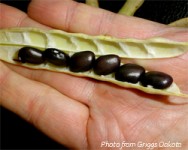
Join us for research and production updates on dry bean varieties and bean breeding, weed management, Western bean cutworm, and white mold disease. There will also be an update on food safety practices and documentation required by buyers. We will also review research priorities and gather suggestions for future educational programs. 1.25 DEC recertification credits and CCA credits will be available.
Lunch will include tasty dry bean dishes from the New York Coalition for Healthy School Food.
Agenda Topics:
- Towards a durable management strategy for white mold in dry beans in NY - Sarah Pethybridge, NYS Agricultural Experiment Station, Cornell - Geneva
- Breeding, evaluation and development of dry bean varieties that are highly adapted to NYS growing environments and markets - Phil Griffiths, Cornell
- What's new from industry
- Comparison of new and standard dry bean varieties at the NYS Agricultural Experiment Station Research Farm - Jim Ballerstein, NYS Agricultural Experiment Station, Cornell - Geneva
- Weed management research in dry bean - Darcy Telenko, CCE Cornell Vegetable Program
- The magnitude and distribution of western bean cutworm and the risk to dry bean production - Marion Zuefle, NYS IPM Program
- Food safety practices and documentation required by buyers - John McCreedy, New York Bean LLC
- Cool school food: Encouraging the use of dry beans in school lunches, and promoting the health aspects of dry bean consumption - Amie Hamlin, Coalition for Healthy School Food
- Report on the NYS Dry Bean Endowment for dry bean research - Shelly Vaccaro and Brian Bodah, NYSAES, Cornell - Geneva
- Review of research priorities and suggestions for educational programs
Cost: $25 for Cornell Vegetable Program enrollees; $35 for all others. Registration will be available at the door but lunch cannot be guaranteed unless pre-registration is received by March 1st.
This event is sponsored by BASF, Bayer, Genesee Valley Bean, Nachurs Alpine Solutions, and New York Bean LLC.
Sponsor opportunities are available. Questions or special needs, contact Julie Kikkert. In case of bad weather, call 585-313-8160.
Agenda and Mail-in Registration Form (PDF; 531KB)
Sorry, the opportunity to sponsor this event has passed.


Asparagus

Beets

Broccoli

Brussels Sprouts

Cabbage

Carrots

Cauliflower

Cucumbers

Dry Beans

Eggplant

Ethnic Vegetables

Garlic

Horseradish

Kohlrabi

Leeks

Lettuce / Leafy Greens

Melons

Mushrooms

Onions

Parsnips

Peas

Peppers

Potatoes

Pumpkins / Gourds

Radishes

Rhubarb

Rutabaga

Snap Beans

Squash - Summer

Squash- Winter

Sweet Corn

Sweet Potatoes

Tomatoes

Turnips

Upcoming Events
IPM Field Day for Urban Growers
September 10, 2026
Buffalo, NY
Join us for a hands-on field day exploring integrated pest management and season extension tools for urban growing spaces and the opportunity to build community with local growers!
This event will focus on best practices for using row covers and rat mitigation. Check out our CCE demonstration trial using insect exclusion netting to manage swede midge, an invasive fly that causes damage to brassica crops. Explore how to identify rat activity, reduce attractants, and strengthen site management. Hear from local growers on how they manage pests with a focus on organic management and how they extend the season on their farms and gardens.